
How preschoolers play
Between 3 and 5, play grows a plot. A 4-year-old pretends to be other people or animals, asks to join other children, and holds a crayon with fingers and thumb instead of a fist, according to the CDC’s milestone checklist. By 5, the CDC expects most children to follow rules and take turns in games, count to 10, tell a short story with at least two events, and pay attention to an activity such as a craft or story for 5 to 10 minutes. They need to move, too: the preschool play tips on the AAP’s HealthyChildren.org site say children this age need at least three hours of physical activity a day.
That suggests an easy way to shop. Choose the kind of play first and the toy second; most good preschool gifts serve one of five kinds of play: pretend, building, a first game with rules, art, or energetic play outside. The AAP’s guide to play recommends dress-up clothes and props for this age but warns against over-structuring them, noting that a little boredom helps creativity. The best gifts leave room for the child to decide what happens next.
Pretend play and dress-up
The CDC’s suggested activities for 4-year-olds include pretend-play items such as dress-up clothes, play kitchen things, and blocks. A costume with a job attached gives a story somewhere to begin. The Melissa & Doug Fire Chief Costume Set (labeled 3+) includes a jacket, helmet, badge, extinguisher, bullhorn, and a reusable name tag, and the maker says the jacket is machine washable. The Melissa & Doug Get Well Doctor Kit (labeled 3+) packs 25 pieces, including a stethoscope, blood pressure cuff, and thermometer, into a carrying tote, and every stuffed animal in the house can become a patient.
Character playsets suit children who replay their favorite shows. Bluey and Bingo’s Supermarket (labeled 3+) has three levels, a moving escalator, 24 store sounds, and two figures; it needs three AAA batteries and carries a small-parts warning. Among this year’s bigger licensed toys, the Toy Insider’s 2026 Hot 20 for ages 3 and 4 includes the PAW Patrol Megasaurus Vehicle, which inflates a dinosaur about two and a half feet tall from an 18-inch truck, according to Spin Master. It is a showpiece, though the maker says the dinosaur deflates and folds back inside the truck for storage.
For everyday play, a set of Melissa & Doug wooden play food (labeled 3+) works with any toy kitchen, shop counter, or picnic blanket the child already has.


Building toys for 3- to 5-year-olds
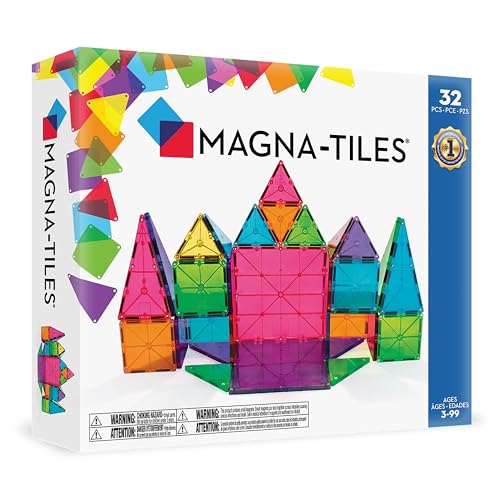
The CDC suggests toys that fit pieces together, such as puzzles and blocks, for 5-year-olds. Magnetic tiles suit this age well because the pieces join by magnet rather than by pressing small studs together. The MAGNA-TILES Classic 32-Piece Set has a suggested age of 3 to 99 on the maker’s page, which also says every piece works with other MAGNA-TILES sets, so a starter set can grow. Our review of the Classic 32 looks at what that many tiles will build. The PicassoTiles 60-Piece Set (labeled 3+) gives more pieces for a lower outlay, and the MAGNA-TILES microMAGS Travel Set (labeled 3+) shrinks the idea to 26 small tiles in a tin that doubles as a building base for car trips and restaurants.
Other systems suit different builders. A BRIO World Dinosaur Circle Set (labeled 3+) is a complete 12-piece railway with a dinosaur that lifts its head to eat leaves, and BRIO says it also works as an addition to an existing set. The Learning Resources Gears Starter Building Set (labeled 3+) has 60 pieces, including gears, axles, and a handle, for a child who likes making things turn. LEGO DUPLO Caring for Animals at the Farm (labeled 2+) adds a farmhouse, stable, and eight figures to a DUPLO collection. If you are deciding between systems, our comparison of magnetic tiles and wooden blocks lays out the trade-offs.


First board games
“Follows rules or takes turns when playing games with other children” is on the CDC’s list for 5-year-olds, and Zero to Three says simple board games build counting, matching, memory, and listening skills along with self-control, turn-taking, and coping with losing. At 3 and 4, choose games that need no reading and finish quickly.
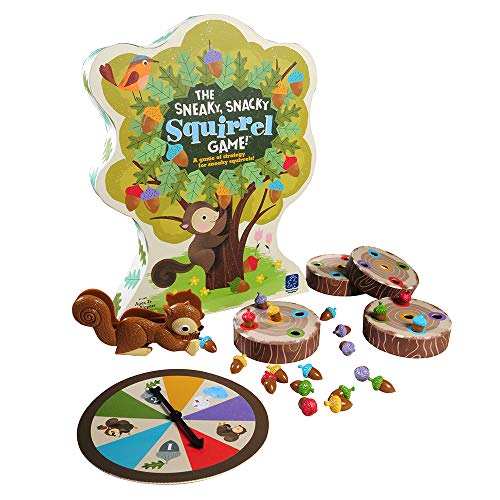
Count Your Chickens (labeled 3+) is cooperative: players work together to bring Mother Hen’s chicks back to the coop, counting as they go, and win or lose as a team, which takes the sting out of a first defeat. Candy Land (labeled 3+) is the classic race, and Hasbro notes that it needs no reading. The Sneaky Snacky Squirrel Game (labeled 3+) has players collect colored acorns with a squirrel-shaped squeezer, so small hands get a workout along with the color matching.
From 4, picture-matching games add speed. In Zingo (labeled 4+), a dispenser reveals two picture tiles at a time and the first player to call out a match claims it; the rulebook has a less competitive side on each card for younger players. At 5, Outfoxed! is a cooperative whodunit for two to four players that takes about 20 minutes, according to Gamewright. Our guide to first board games compares more options by age.


Art supplies and play dough
The same HealthyChildren.org play tips suggest a dedicated place to make things and get messy, stocked with crayons, markers, paint, paper, glue, stickers, and odds and ends. Good basics are easy to underrate as a gift. Crayola Washable Broad-Line Markers (labeled 3+) and Crayola Washable Kids Paint (labeled 3+) cover most of a preschooler’s art, and a big roll of paper costs very little. Our crayons and washable markers guide and first craft box guide go further.
For car trips or a home where paint is unwelcome, the Crayola Color Wonder Magic Light Brush (labeled 3+) comes with six paints and 18 sheets of paper; Crayola says the paints show up only on its special Color Wonder paper. The Melissa & Doug Water Wow! Farm pad (labeled 3 to 7) uses only water from a refillable pen, and its pages can be colored again once they dry. The CDC suggests playing with dough to build hand strength; the Play-Doh Starter Set (labeled 3+) has four small cans, nine tools, and a vinyl bag to keep them together.


Books and audio players
By 3, most children ask “who,” “what,” “where,” and “why” questions, and the CDC’s suggestions for 4-year-olds include answering them or finding the answers together. National Geographic Little Kids First Big Book of Why is built for exactly that: the publisher lists it for ages 3 to 7, with questions about everyday things such as belly buttons, plus simple activities. For bedtime, Goodnight, Goodnight, Construction Site (listed for ages 3 to 5) is a rhyming read-aloud for truck fans, and Bluey: More 5-Minute Stories collects short stories that fit before lights-out.
An audio player lets a preschooler choose a story without a screen. The Yoto Mini is labeled for ages 3 to 12; Yoto says it plays for up to 14 hours a charge, holds about 500 hours of downloaded audio for offline listening, shows an OK-to-wake clock, and has no microphone or camera. A child slides a card into the slot to play a book or album. Wi-Fi is needed for setup and for downloading cards, and the cards themselves are the ongoing cost. Our Yoto and Toniebox comparison goes through the differences.


Outdoor toys and nature kits
Gifts that send a preschooler outside balance the rest of the pile. The Stomp Rocket Jr. (labeled 3+) needs no batteries: a child stomps on a pad and a foam rocket shoots up, as high as 100 feet according to the maker. It comes with eight rockets, which matters when a few land on the neighbor’s roof. If a scooter or bike is on the list, a helmet should be too; the CPSC asks that children wear one every time they ride, and our scooter guide covers fit and steering.
For a child who stops to look at every beetle, the B. toys Bug Bungalow (labeled 3+) includes a mesh case, a container with a magnifying lid, tweezers, and a magnifier. An Insect Lore Butterfly Garden turns the life cycle into a three-week project, according to the maker. The kit comes with a voucher rather than caterpillars, and redeeming it costs an extra fee, so read the voucher terms before giving it.


Small parts and younger siblings
Federal small-parts rules apply to toys intended for children under 3, so a toy labeled 3+ may contain pieces small enough to choke a younger sibling, as the CPSC explains. Game pieces, playset accessories, and small figures are typical examples. If a toddler lives in the house, favor larger pieces, or agree with the parents on a high shelf or a lidded box for the small ones. The AAP also advises keeping toys with button batteries or high-powered magnets away from young children, so check how the battery compartment closes on anything that lights up or makes noise.
When a child turns 6, our guide to gifts for 6- to 8-year-olds picks up with first chapter books, strategy games, and building from instructions.
Sources & approach
Reviewed . Sources below support the specifications and guidance cited in this article. Recommendations and suggested activities are editorial judgments. We have not tested the products hands-on; source or model limitations are identified in the text.
- CDC: Milestones by 4 years (opens in a new tab)
- CDC: Milestones by 5 years (opens in a new tab)
- CDC: Milestones by 3 years (opens in a new tab)
- HealthyChildren.org (AAP): The power of play (opens in a new tab)
- HealthyChildren.org (AAP): 5 play tips for preschool-age children (opens in a new tab)
- HealthyChildren.org (AAP): Toy buying tips for babies and young children (opens in a new tab)
- Zero to Three: Tips for choosing toys for toddlers (opens in a new tab)
- CPSC: Small parts for toys and children’s products (opens in a new tab)
- CPSC: Toy safety tips (opens in a new tab)
- MAGNA-TILES: Classic 32-Piece Set (opens in a new tab)
- ThinkFun: Zingo! instructions and parent’s guide (PDF) (opens in a new tab)
- Gamewright: Outfoxed! (opens in a new tab)
- Penguin Random House: National Geographic Little Kids First Big Book of Why (opens in a new tab)
- Yoto: Yoto Mini (opens in a new tab)
- The Toy Insider: 2026 Holiday Gift Guide announcement (PR Newswire, Sept. 24, 2026) (opens in a new tab)
Rewritten and expanded October 19, 2026. Age labels and product details were checked against the makers’ and publishers’ descriptions, and the developmental notes against the CDC, AAP, and Zero to Three pages listed here.
Before buying or using a product, follow the exact model’s age label, warnings, and instructions. Check current US recalls (opens in a new tab), or your local recall authority outside the US.
Keep exploring: Gifts that fit their interests