
How themed sets and brick boxes differ
A themed LEGO set is a kit for one particular thing: a fire truck, a farm, a spaceship. It comes with step-by-step instructions, the special pieces that model needs, and usually figures to play with once it is built. A brick box, such as those in the LEGO Classic range, is a supply: a mix of bricks and special pieces, a few pages of ideas, and no single model the box is “for.”
Both formats leave plenty of room for imagination. A child can invent long stories inside a carefully built farm, and can follow the idea pages in a brick box step by step. The more useful question is what the child wants to do after the first build. A child who wants to play with a particular thing is well served by a themed set; a child who wants to keep making something new needs a supply of bricks.
Three kinds of LEGO box
Themed sets
Most LEGO ranges, from DUPLO Town to City and Friends, are themed. The City Fire Ladder Truck 60463 is a typical small one, with 82 pieces and two firefighter minifigures, labeled 4+. The instructions build one truck, and after that the truck is a toy.
3-in-1 sets
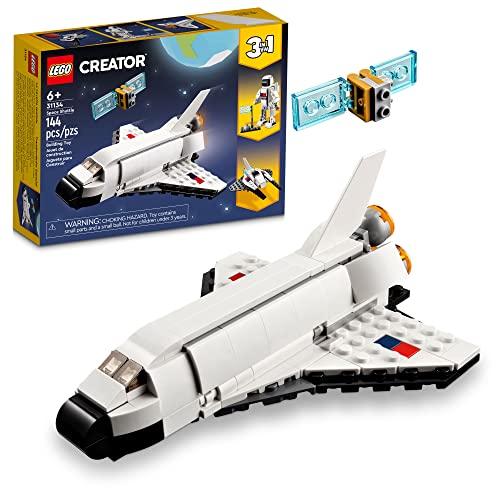
LEGO Creator 3-in-1 sets come with instructions for three models made from the same pieces, built one at a time. The Creator 3-in-1 Space Shuttle 31134 has 144 pieces that make a space shuttle, a posable astronaut, or a spaceship, and is labeled 6+. Taking the first model apart is part of the plan.
Brick boxes and creative sets
LEGO Classic brick boxes are assortments with ideas to get started. The Medium Creative Brick Box 10696 has 484 pieces and the Large Creative Brick Box 10698 has 790, both labeled 4–99. Smaller Classic creative sets sit between the two approaches: Creative Food Friends 11039 gives instructions for four food characters that rebuild into four more, then leaves the rest to the child.
Themed sets for storytellers
If your child already acts out stories with figures, a themed set hands them a cast and a setting without an adult having to invent the plot. The DUPLO Caring for Animals at the Farm 10416 shows how much play LEGO packs into a toddler set: 74 pieces, labeled 2+, including a farmhouse, a stable, a chicken coop, a hayloft, two people, and farm animals. Once it is built, feeding the animals, saddling the horse, and mucking out (there is a shovel) are the game.
Before buying, check that the set includes what the story needs. Figures, a door that opens, or somewhere to park a vehicle can matter more to a young child than the piece count. Look past the theme itself, too: a child who loves a character on screen doesn’t necessarily want to build that character’s house. Whether they play with figures now is the better guide.

3-in-1 sets and brick boxes for builders
Children who love building tend to enjoy one of two things, and a child may move between them. Some like the instructions themselves: finding the next piece, matching the picture, watching a recognizable model take shape. Others want to start from their own idea. A 3-in-1 set suits the first kind of builder and nudges them toward the second, because the box expects the first model to be taken apart. A brick box suits the second kind from the start.
If an empty table feels too open, give a brick-box builder a small problem to solve: a car that carries a passenger, a bed for a figure, a doorway wide enough for a toy animal. A little direction gets free building started without turning it into another model to copy.
Instruction-led sets raise a practical question: who will help? A set that needs an adult alongside can be a lovely shared project when that time exists, and a frustrating gift when everyone assumes the child will build it alone.
What’s inside a LEGO Classic brick box?
Brick boxes differ more than their names suggest, and the parts list shows what each box is good at. LEGO lists the Medium Creative Brick Box with bricks in 35 colors, plus windows, eyes, 18 tires and wheel rims, and a green baseplate. With that many wheels, it is a strong box for vehicles. The Large Creative Brick Box has 790 pieces to the medium box’s 484, but only six tires and wheel rims; its special pieces lean toward buildings, with eight kinds of windows and doors and two baseplates.
A bigger box, then, isn’t automatically a better one: a child who builds cars will run short of wheels in the large box sooner than in the medium one. If you already own bricks, look at what keeps running out, whether wheels, doors, or flat plates for floors, and buy the set that supplies it.
Price per piece is a weak guide for the same reason. A box’s total lumps together tiny decorative pieces, figures, and large structural bricks, which do very different jobs. Judge a set by what its pieces will let this child build.


Rebuilding, storage, and lost instructions
If the original model matters to the child, keep the booklet with the set. If it goes missing, LEGO posts building instructions that you can search by set number, and its LEGO Builder app holds instructions for old and new sets.
Decide early whether the finished model will be displayed or played with and taken apart, and whether sets can be mixed. A model kept whole needs shelf space; a collection rebuilt every day needs a container the child can manage and a way to find the important pieces. A family may welcome a small new scene and have nowhere to put a much larger one, which is worth knowing before a gift arrives.
Which LEGO to buy by age
- Under 4: stay with DUPLO. The DUPLO Brick Box 10913 is a general starter with two figures and a car, labeled 1½+; a themed DUPLO set such as the farm suits a child with a favorite subject.
- Ages 4 and 5: start with a small 4+ themed set or a small Classic creative set, then add a brick box once the child is comfortable with standard bricks.
- Ages 6 and up: 3-in-1 sets for children who like instructions but want variety, and the larger brick boxes for children who build from their own ideas.
LEGO calls four the earliest age to introduce standard bricks, so settle the DUPLO-or-LEGO question first. After that, the choice between a themed set and a box of bricks comes down to what the child will do with it the day after it is built. The whole range is on our LEGO page.
Sources & approach
Reviewed . Sources below support the specifications and guidance cited in this article. Recommendations and suggested activities are editorial judgments. We have not tested the products hands-on; source or model limitations are identified in the text.
- LEGO DUPLO Caring for Animals at the Farm 10416 (opens in a new tab)
- LEGO City Fire Ladder Truck 60463 (opens in a new tab)
- LEGO Creator 3-in-1 Space Shuttle 31134 (opens in a new tab)
- LEGO Classic Creative Food Friends 11039 (opens in a new tab)
- LEGO Classic Medium Creative Brick Box 10696 (opens in a new tab)
- LEGO Classic Large Creative Brick Box 10698 (opens in a new tab)
- LEGO DUPLO Brick Box 10913 (opens in a new tab)
- LEGO: Building instructions (opens in a new tab)
- LEGO: Transitioning your child from LEGO DUPLO to LEGO bricks (opens in a new tab)
Rewritten October 19, 2026. Set contents, piece counts, and age labels were rechecked against LEGO’s US product pages; the advice on matching a set to a child is our own.
Before buying or using a product, follow the exact model’s age label, warnings, and instructions. Check current US recalls (opens in a new tab), or your local recall authority outside the US.
Keep exploring: Building toys & first games · LEGO collection