
Choose the activity as well as the Pokémon
Before buying, find out two things: the child's favorite Pokémon and what they enjoy doing with it. Drawing Pikachu, learning character names, building a model and playing the trading-card game are different interests. A gift can get the character right and still ask the child to spend an afternoon doing something they don't enjoy.
Age helps narrow the choice, but it won't tell you whether a six-year-old wants company for a game or a quiet coloring project. The starting points below reflect both the product's stated age and the activity involved. Check the exact product's age label; the buying age groups aren't permission to use a set below its minimum.
| Shopping for | Start with | Check before choosing |
|---|---|---|
| Ages 3–5 | A shared Pikachu book or Pokémon coloring | Do they like listening to books or sitting down to draw? |
| Ages 6–7 | Guess Who? or a stained-glass coloring kit | Would they prefer a two-player game or their own art project? |
| Ages 7–10 | The Essential Handbook | Do they enjoy looking up characters, and do they own this edition? |
| Ages 8–12 | Monopoly Pokémon Edition | Do they enjoy managing game rules, and who will play? |
These choices overlap deliberately. An eleven-year-old who loves making pictures may get more from the art kit than from a game, and a younger fan can enjoy a reference book with someone reading alongside them. The label is one part of the decision; the child's existing habits supply the rest.
Pokémon gifts for ages 3–5: coloring and books to share
For a child who recognizes the characters but isn't asking for a game, choose something they can enjoy without learning a rule system. The Crayola Giant Pokémon Coloring Book has 288 pages and two sticker sheets. Crayola labels item 040851 for ages three and up; coloring supplies are sold separately. Include suitable crayons if the gift needs to be usable as soon as it's opened.
A large coloring book suits a child who repeatedly returns to drawing. For a child who prefers being read to, A Friend Like Pikachu! offers a different kind of shared time. This 24-page Little Golden Book has a publisher age range of three to seven. That range describes its audience; it doesn't mean every three-year-old should read it independently.
If a five-year-old is making their own Pokémon cards, take the making seriously. A coloring gift may fit that interest better than a box whose appeal depends on playing a formal card game. They can come to the rules later if they want to.


Ages 6–7: Guess Who? gives two people a game to share
Guess Who? Pokémon Edition is a useful starting point when a child wants to play with someone. Players choose a hidden character, ask yes-or-no questions and eliminate possibilities. Hasbro's G3348 edition is for two players aged six and up, with 48 Pokémon across its double-sided sheets. Adult assembly is required.
The questions can begin with visible features, such as whether a Pokémon has wings, so the adult needn't turn each round into a test of character knowledge. The important fit is whether the child enjoys taking turns and narrowing down a choice.
Buy this for a pair. It doesn't provide a simultaneous game for three siblings, and it needs a willing opponent. If the recipient usually plays alone, a book or craft is a better match. Keep its small parts away from children under three.

Pokémon crafts from age six: make something for the window
The Klutz Pokémon Stained Glass Art Kit gives coloring a finished object to aim for. Its translucent vellum pages create a stained-glass effect when displayed in a window; ordinary paper pages can go on the wall. Scholastic lists this exact edition, ISBN 9781338895995, for ages six and up, with 18 designs and double-ended markers in ten colors.
This is paper art, with no glass cutting involved. Choose it for a child who likes completing a picture and finding a place to show it. The supplied markers make it a more complete coloring gift than the Crayola book, while Crayola offers many more pages. Neither format is automatically better: one offers a particular display project, the other a larger supply of pictures to return to.


Ages 7–10: choose the handbook for a child who likes Pokémon facts
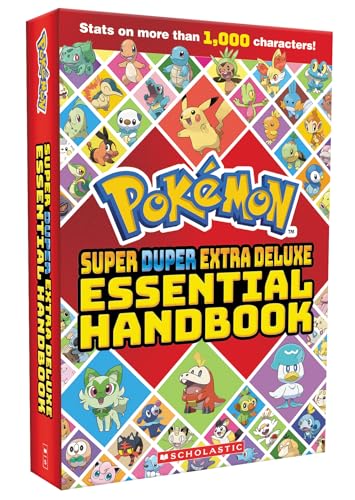
If the child wants to know names, recognize characters and look things up, consider the Super Duper Extra Deluxe Essential Handbook. Scholastic targets it at ages seven to ten and describes an illustrated reference covering more than 1,000 Pokémon, including additions from Scarlet and Violet.
A reference book invites dipping in: the child can look for a favorite rather than read from the beginning. It is a different purchase from the shorter Pikachu book, and a birthday doesn't decide when to switch. Look at the kind of books they already enjoy and whether they want to browse pictures, read details or do both with help.
Check the shelf before buying. Pokémon handbook titles are similar, so compare the cover and ISBN 9781339028019 with the copy they already have. Buy this for character information; it isn't a starter set for learning the trading-card game.

Ages 8–12: Monopoly suits children who already enjoy board games
Monopoly Pokémon Edition is the choice for a group that wants more happening around the table. In Hasbro's G0716 version, for two to four players aged eight and up, players explore locations, catch Pokémon and battle rivals. Poké Balls replace money; collecting the eight Pokémon types on a tracker mat is one way to win.
That gives players more to manage than Guess Who's question-and-elimination loop. Choose it when the child likes board games already and someone is willing to learn this edition's rules with them. Don't rely on remembering an older Pokémon Monopoly: the model and rules matter.
For a ten-, eleven- or twelve-year-old who would rather draw than negotiate a board-game turn, the craft kit remains a sensible gift. There is no need to buy the more involved game just because the recipient is older.


For Pokémon builders, check the LEGO set before buying
A child who already enjoys LEGO has another route into the theme. The SMART Play Training House with Pikachu 72164 is a 400-piece set for ages six and up. LEGO identifies it as an All-in-One set, including the SMART Brick and charger needed for its responsive lights and sounds.
The distinction matters when choosing a first gift: a SMART Play Compatible set needs a SMART Brick added for its interactive functions. Check what the family owns before picking an expansion. Our LEGO SMART Play guide explains the system in more detail.
Choose this for enthusiasm about building as well as Pikachu, and plan for help if the child usually builds with an adult. LEGO also warns that the flashing effects may trigger epilepsy in susceptible people; the set contains small parts and a small ball.

Buying Pokémon cards: collecting and learning to play need different gifts
Before buying cards, ask the parent whether the child wants to collect pictures, add to an existing deck or learn the trading-card game. Those requests can sound identical in a short birthday message, but the contents needed are different.
Pokémon Support distinguishes fixed, ready-to-play 60-card decks from randomized booster packs. Boosters can be a collecting gift; they don't promise a particular character. For a first game, look for a learn-to-play product with complete decks and instructions, and agree who will help teach it.
For example, the Hop's Zacian ex Box contains four booster packs and named promotional cards. It can suit someone who specifically wants that collection, but it is not a complete beginner game or a ready-made deck. A large box and a familiar character don't tell you that it will teach the rules.
When you're unsure, find out what the child wants to do next. Another picture to color, a character to read about or an afternoon playing together is a clearer gift idea than simply buying more Pokémon things.
Sources & approach
Reviewed . Sources below support the specifications and guidance cited in this article. Recommendations and suggested activities are editorial judgments. We have not tested the products hands-on; source or model limitations are identified in the text.
- Crayola: Pokémon Coloring Book, item 040851 (opens in a new tab)
- Golden Books: A Friend Like Pikachu! (opens in a new tab)
- Hasbro: Guess Who? Pokémon Edition, G3348 (opens in a new tab)
- Scholastic: Pokémon Stained Glass Art, ISBN 9781338895995 (opens in a new tab)
- Scholastic: Super Duper Extra Deluxe Essential Handbook (opens in a new tab)
- Hasbro: Monopoly Pokémon Edition, G0716 (opens in a new tab)
- LEGO: SMART Play Training House with Pikachu, 72164 (opens in a new tab)
- Pokémon Support: trading-card product types (opens in a new tab)
- The Pokémon Company: Hop's Zacian ex Box contents (opens in a new tab)
Product ages, editions and contents checked against manufacturer and publisher information on 3 November 2026. This is a research-based buying guide, not a hands-on test.
Before buying or using a product, follow the exact model’s age label, warnings, and instructions. Check current US recalls (opens in a new tab), or your local recall authority outside the US.
Keep exploring: Gifts that fit their interests